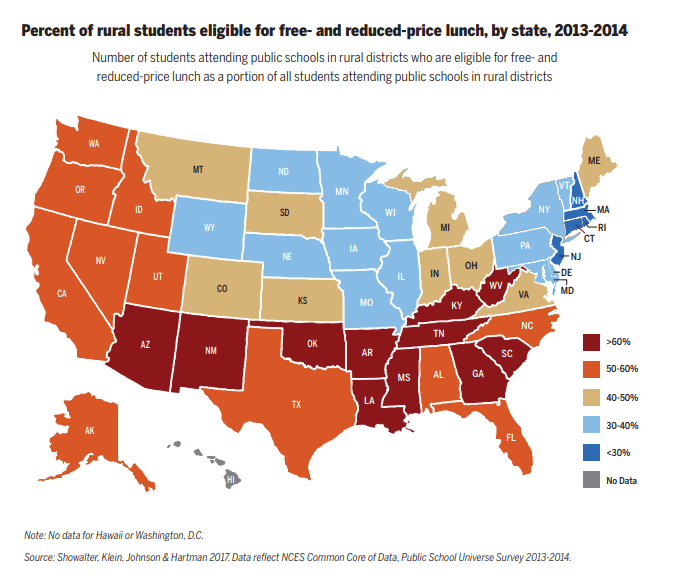
In a rural community with low educational attainment, poverty rates may be up to eight percentage points higher than in a similar community with higher levels of education. Today, more than half of the rural student population comes from a low-income family in 23 states—up from 16 states just two years ago.
Rural districts battle significant barriers that impact students’ academic success. As a result of these barriers, one out of every four rural students fails to graduate from high school. Poverty is one of the most significant barriers these communities face.
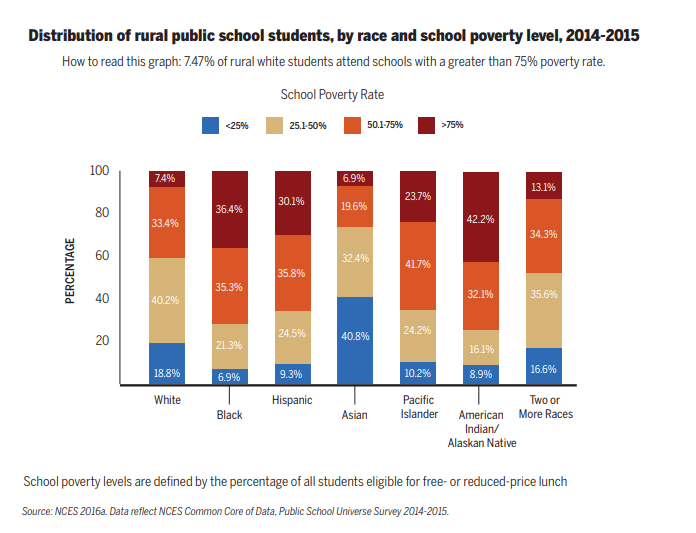
According to the Center of Public Education Report, 64% of rural counties have high rates of child poverty. In an effort to overcome this obstacle, education leaders are taking at two-prong approach. Many rural districts that are implementing innovative strategies designed to remarkably influence students’ success while stimulating the growth of the local economy.
One innovative strategy that some districts in rural communities have implemented is “Grow-Your-Own” Teacher Programs. This program encourages local high school students to stay and teach in their own communities after they complete teacher training programs.

One of the most popular programs is South Carolina’s Teacher Cadet Program. This program cultivates teachers for rural areas experiencing shortages. Grow Your Own Programs have been an effective solution to address some of the unique challenges experienced by rural school districts.
Innovative programs similar to this depend on collaborative opportunities between schools and colleges. Rural school districts can benefit from creative partnerships with higher education and organizations that are committed to their success.
 In Virginia, rural school districts have partnered with our organization, Virginia Ed Strategies. We are an intermediary organization connecting education to workforce needs. This partnership is beneficial in stimulating economic growth and supporting students’ academic, technical, and employability skills. We help rural educators collaborate with local workers in STEM-H careers to identify the specific skills that students must master in the classroom to be successful in the workforce. This helps businesses develop and grow their future talent pipeline and equips students with the knowledge needed to meet the growing skill demands of the 21st century.
Through innovative strategies and collaborative partnerships, rural districts are able to equip students with the education and preparation needed to overcome the barriers of poverty, compete in a global economy, and positively impact tomorrow’s careers and workforce demands.




 Antoinette Jenkins
 Leah Williams-Rumbley
 Zuzana Steen
 Beth Rhinehart
  Kristie Proctor
 Deborah Jonas
 Andy Gail